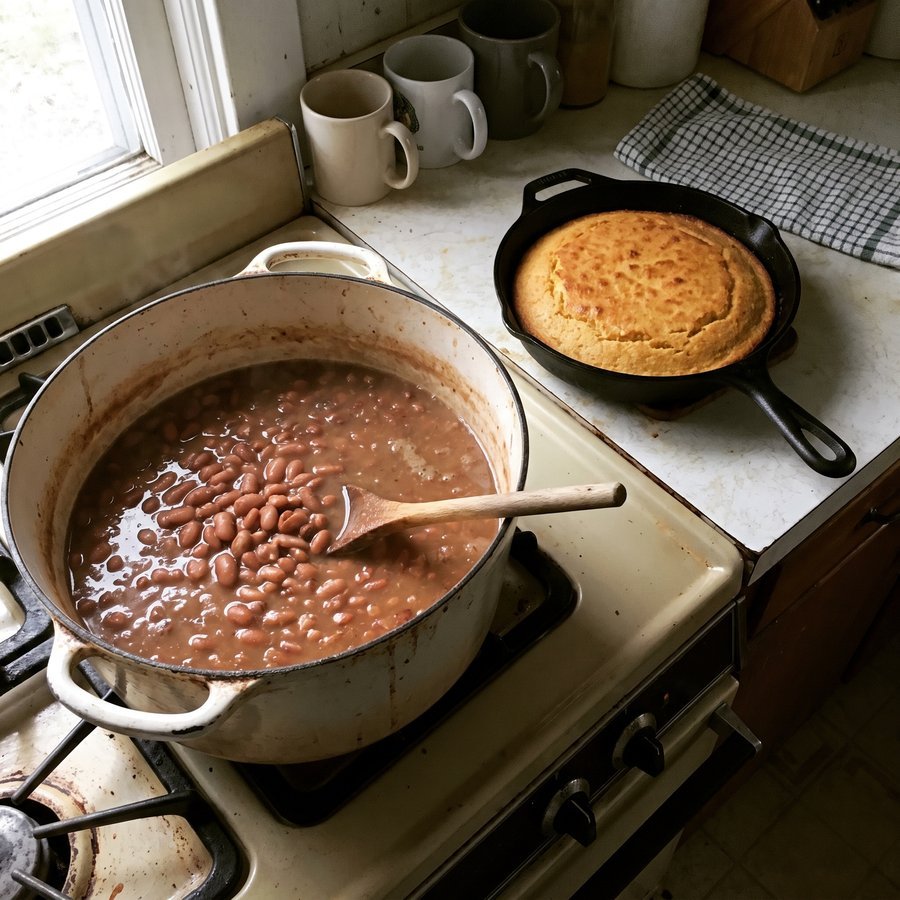
The Depression pantry my mother kept for seventy years in Cimarron County, Oklahoma. The twelve things she always had, how much of each for your family, how to store them so they last, and what to do when the lights go out. With the one old rule that makes each part of it work, so you get it right the first time.
Over a hundred dollars for a bucket of freeze dried pouches with a twenty five year label, full of food your family has never eaten and never will.
A generator, a solar box, a water machine. Every one of them needs fuel, sun, or batteries on the one day you have none of those.
That you need a bunker, a farm, or a big check to be ready. You need a cool shelf, a few staples, and a few old habits.
If your beans never softened or your flour got bugs in it, that was never your fault. Nobody showed you the old way.
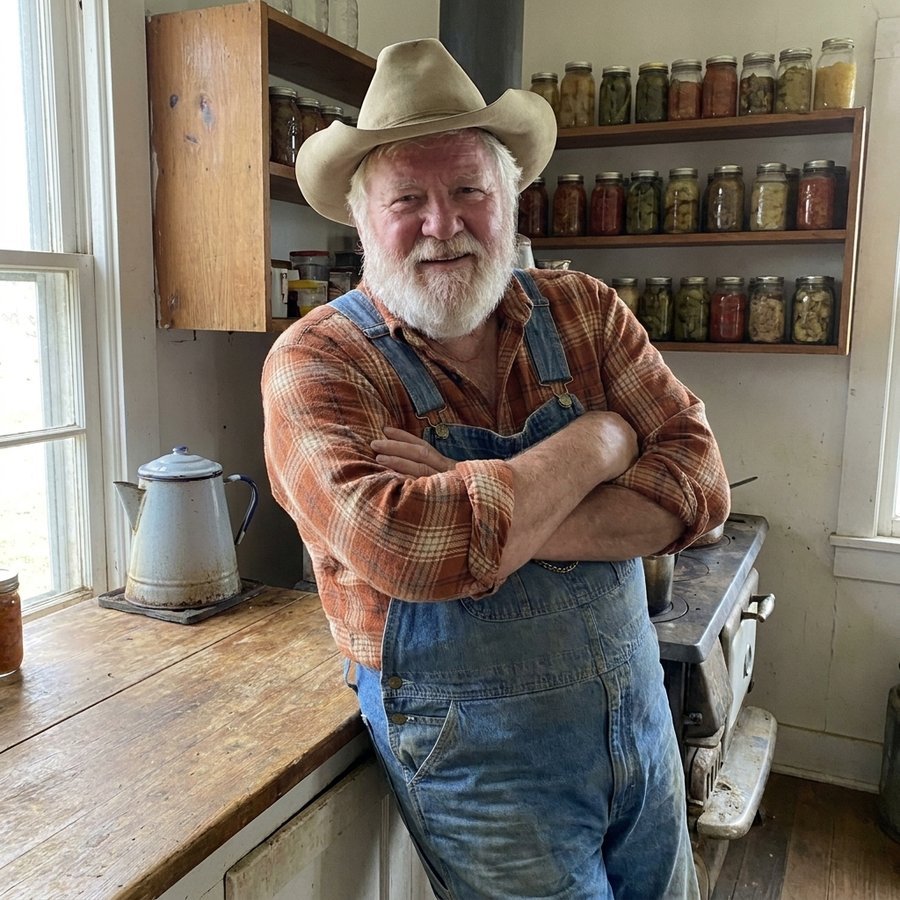
I was born in 1950 in Cimarron County, out at the far west end of the Oklahoma panhandle. My mother, Opal, was eleven years old on Black Sunday, April 14, 1935, when the dust came over the county like a wall and turned the afternoon to night.
She saw what an empty shelf does to a family. So she made sure ours was never empty. Not in the droughts, not in the bad winters, not the year my father hurt his back and no money came in at all. She knew to the cup how long everything would last, and she kept all of it in her head.
I’m not a prepper and I don’t think the world is ending on Tuesday. I’m a farmer’s son who paid attention. What I learned is simple: the old way is almost always the cheaper one. She did less than you think, in the right order.
So I wrote it all down. Her twelve staples, how much of each, how she kept them, and every rule that made it work, checked against what the USDA and the Red Cross say today. Learn the rules, and the pantry becomes yours.
Six of the rules in the book, one on every guide.
Four days in the freezer first, to kill the bug eggs that come from the mill. Then a bucket with a tight lid and the date on it.
Flour that keeps a whole yearBuy a little more of what you already eat every week, date it, and always eat the oldest first.
The shelf that eats oldest firstSalt any time. It’s the molasses and the tomatoes that keep the skins tough. Those go in once the beans are tender.
One pot of beans, three days of supperCool, dark, and on opposite sides of the room. Onions make potatoes sprout. Kept apart, both last till spring.
Potatoes and onions that last till springClose up one small room with blankets and everybody in it. Nothing that burns ever comes inside.
The warm roomKeep it shut. About four hours for the refrigerator, about forty eight for a full freezer.
The icebox clockEvery guide is two pages: first the photo of what you’re aiming for, then the whole guide on one page. No flipping back and forth with your hands full.
You see exactly what you’re making before you start.
The twelve things that were always on her shelf, what to buy and what to leave in the store.
With the signs to look for: the smell, the color, the way it feels in your hand.
The one thing my mother did that makes the whole thing work, and why it works.
What you see, why it happened, and how to fix it today or next time.
What to do with what’s left over. Nothing went in the trash in her house.
The pot of beans that fed nine of us at one table, written out in full.
Supper, then soup, then bean cakes. Serves 6 three times · soak overnight · cook 2 hours
The sour goes in last. Molasses, tomatoes, and vinegar keep bean skins firm if they go in too early. Salt is fine any time.
Still hard after hours? The beans are over two years old or your water is very hard. Keep cooking, and rotate your beans sooner.
Sample layout. Every guide in the book follows this two page format.
Real comments from the YouTube channel, quoted word for word. They are about the videos; the book is brand new.
THIS IS EXACTLY HOW MY GRANDMA KEPT HER PANTRY. THANK YOU SIR, GOD BLESS!
@jake_miller2291I watch your videos any time I can. Thank you, from a very frustrated bean cook.
@sunny.vibes07Hello from Tulsa. I know Cimarron County well. We did the very same thing.
tyler.r88drumsI watched the whole video and loved everything you said and did. Thank you so much and God bless your mama
@coffee4cali_23Now I know how to pick it, store it, date it, rotate it, and actually use it…
@mads_hartley.99Great tip! … You finally explained why my potatoes kept sprouting … Thank you so much!
@noah.sk8s_514“I always froze my flour before putting it away … I never knew exactly why I still did it, but now I know.”@patricia.baker03
That is the whole book, Patricia. Every trick and the reason it works, so you never have to wonder again.
Use it for 7 days. If it doesn’t change how you keep your pantry, write to us and you get every cent back. No questions asked.
Anything else, ask me in the comments under any video. I read every one.
A 67 page PDF with Opal’s twelve pantry staples, twelve step by step guides, the pantry calendar, the table of how much to keep for your family, and printable checklists. You download it right after paying and get every future update free.
No. It’s a digital PDF you can read on your phone, tablet, or computer, or print the pages you want on the pantry door.
That’s exactly who I wrote it for. Every step tells you what to look for, and every guide has a section for when something goes wrong.
No. A cool closet or a shelf away from the stove is enough. Every guide works in an apartment.
No. Chapter six shows you how to build the whole pantry for about ten dollars a week, one staple at a time.
No. It’s about the ice storm, the power outage, the lost job, and the bad month. My mother wasn’t afraid of those. She was ready for them.
Every number for water, food storage, and power outages comes from official guidance from Ready.gov, the USDA, and the CDC. It’s general information, not medical or professional advice.
Write to us within 7 days and you get all your money back. No questions asked.
My mother never wrote it down. I did. All you have to do is fill the shelf.
Get the book ·Instant download · lifetime access · 7 day money back guarantee